There is a quiet joy in knowing a rough size without reaching for a ruler. You start noticing that a credit card is close to two inches wide, your thumb knuckle is about an inch, and a sheet of printer paper whispers the dimensions of your backpack. Measuring by feel turns errands into small wins and helps you make better choices in the moment.
When you look up quick references or conversion charts on public Wi-Fi, it is wise to keep your browsing wrapped. I browse with PlanetVPN so my random searches for “how wide is a curb” or “door frame height” do not broadcast where I am or what I am planning. Privacy aside, here is a set of practical, human ways to measure the world without carrying a toolkit.
Build a mental pocket ruler
Start with body references you always have with you. Calibrate them once with a real ruler, then trust them.
- The first joint of your thumb is about one inch.
- An open hand span from thumb tip to little finger tip is roughly eight to nine inches for many adults.
- Your phone’s long edge is usually around six inches, give or take a few millimeters depending on model.
- A standard bank card is about two inches wide and three and three eighths inches long.
Use these anchors to eyeball gaps, shelves, or a length of cord. The trick is consistency. Check your assumptions at home, then reuse them everywhere.
Everyday objects as measuring blocks
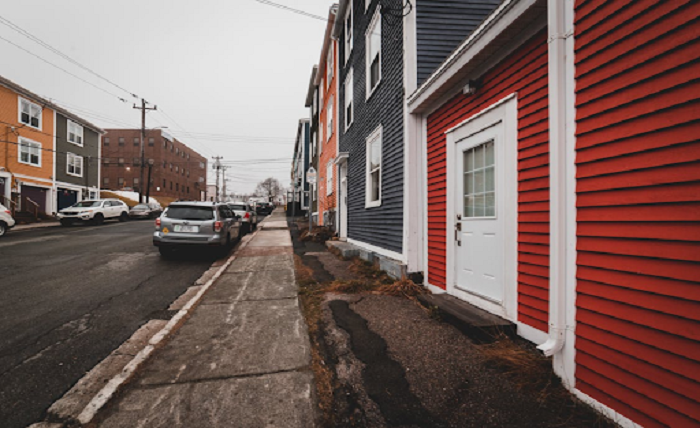
Your city is full of accidental rulers. Learn a few and the world becomes a grid.
- A brick is commonly about eight inches long and two and a quarter inches tall.
- A sheet of letter A4 or US Letter paper gives you a near-12 inch long side.
- Standard doorways hover near eighty inches tall.
- A common sidewalk slab is close to five feet long.
Stack these in your head. If you know a curb is about six inches, and your planter needs to be twice that, you have a foot. Four curb heights make two feet. You will be surprised how quickly your guesses tighten.
Volume without measuring cups
Cooking is where estimation becomes delicious. If you forgot your measuring set, think in shapes.
- One tightly cupped hand of small grains like rice is close to half a cup.
- A closed fist of chopped vegetables is roughly one cup.
- A tablespoon can be mimicked by a heaping scoop with a standard soup spoon.
- For liquids, a mug is often about eight to twelve ounces.
You do not have to be exact. Aim for repeatable. If your mug is eleven ounces, it will still be eleven tomorrow.
Speed, distance and the walking clock
The body also measures time and space. Three miles per hour is a comfortable walking speed for a lot of folks. That means a mile is about twenty minutes of walking. Counting steps helps. If your stride is thirty inches, two thousand steps get you close to a mile. For slopes, your calves are the clincher. If you feel them after a block, you are probably climbing five percent or more. It is not lab grade, but it is reliable enough to decide if you want to bike that route.
When you need a quick level check, use water. Pour a small amount in a tray or pan, set it on the surface, and watch the waterline. Water’s honesty is better than your eyes on a tilted table.
Digital measurements you can actually feel
Not all measuring is physical. Files, photos, and videos have sizes that shape your day. Translate them to something tangible and choices get easier. A three megabyte photo is like three pages of dense text with images. A one gigabyte video is a backpack of pictures. On a decent home connection, a gigabyte might take a handful of minutes; on coffee shop Wi-Fi, it could be a whole latte. If a task will eat a gig, plan for it. Do it when your network is calm. Protect the transfer just like you would protect a parcel in the mail.
You can test your connection like a human. Time how long it takes to upload a fifty megabyte file to your cloud, then repeat at a different hour. If it doubles during the evening, shift your big jobs to the morning. One simple note in your phone saves you a lot of waiting.
A tiny toolkit for better guesses
You do not need gadgets, but a few habit tweaks sharpen your sense of scale.
- Calibrate once a month. Re-measure your thumb inch and hand span so drift does not creep in.
- Keep a foldable tape in your bag or glove box. Use it rarely, but use it to verify your mental numbers.
- Photograph reference objects next to new items. A picture of your suitcase beside a door frame will help you size future bags.
- Map your home in rough numbers. Shelf depths, closet widths, the real interior of your car trunk. Decisions become instant at the store.
- When looking up conversion charts or specs on public networks, keep your browsing private so those little searches do not turn into a profile of your routines.
The joy of getting it right enough
Perfect accuracy has its place, but everyday life rewards repeatable estimates far more. When you know your body’s ruler, the city’s hidden yardsticks, and a few conversion tricks, you move through choices with less friction. You buy a frame that actually fits, pick bins that stack cleanly, and cut the guesswork from errands. Measuring becomes a light reflex, not a chore.
That is the real win. You are not memorizing numbers for their own sake. You are teaching your eyes and hands to speak the same simple language as the world around you. And once they do, nearly everything gets easier to size, carry, cook, pack, and plan.