
The interest in the esports industry has grown so much that simply discussing match results is no longer enough. More and more attention shifts toward understanding which factors actually influence the success of teams and players. I believe esports has long become a discipline where talent alone is not what determines who wins. Analytics, team cohesion, proper preparation, and a stable organizational structure all play a crucial role. When you look at the stages of Valorant, Dota 2, CS2, or League of Legends, it becomes clear that teams with similar individual skill levels can perform at dramatically different tiers. And it is these differences that reveal the real meaning of competitive success.
Individual Skill and Training
In any discipline, individual level remains the foundation. Without solid mechanics a team simply cannot keep up with the tempo of modern tournaments. This is especially noticeable in Counter-Strike 2, where shooting, movement, timing, and the ability to adapt to an opponent define whether a player can survive on the professional stage. But a high level of play in public matches does not automatically mean the player will perform under pressure or fit into a structured team environment.
A good example is the career of s1mple. He was incredibly mechanically gifted long before he became a symbol of CS, and many first heard of him thanks to his matchmaking achievements, where indicators like cs2 ranks help form an initial impression but hardly reflect the depth of a player’s preparation. His real breakthrough happened only when he integrated into team processes, accepted strategic discipline, and adapted his style to the demands of professional play. It was the combination of talent, mental resilience, and readiness to work within a team structure that turned him into an MVP of the biggest tournaments.
This principle is just as visible in other cases within CS2 itself. Players who dominate matchmaking or FACEIT often become less effective on stage, where success requires more than superior aim. Professional play demands timing discipline, following calls, understanding economy, and executing a defined role. At the top level, a round is built not around individual brilliance but around synchronizing with teammates and making decisions within a shared plan. That is why many “public match stars” fail to establish themselves in tier 1: without strategic thinking and discipline, pure mechanics stop giving an edge. In the professional environment, teams value stability, structure, and the ability to elevate the lineup as a whole, not just produce flashy highlights.
Team Chemistry and Communication
Even the strongest players cannot succeed without high quality interaction within the team. A clear example is OG during their championship run at The International. They won not through sheer mechanical dominance, but through unified decision making, trust, and emotional stability. OG consistently held their ground in long, tense series, recovered from difficult drafts, and maintained confidence in situations where most teams would mentally break. Their strength came from a shared understanding of roles and a collective rhythm that held the team together.
A similar pattern appeared in CS2 with Vitality when ZywOo reached peak form and became the central win condition of the roster. His individual brilliance was known long before, but true tier 1 consistency emerged only when a stable core formed around him. After ropz joined, the team gained clearer role distribution and stronger mid round structure. Vitality started winning clutch series not because they always outaimed opponents, but because their decisions were synchronized and reliable. This cohesion allowed them to outperform teams with comparable mechanical talent.
Team chemistry is not an abstract concept but a practical set of skills: clean communication, trust, flexibility during chaotic rounds, and mental resilience under pressure. In games like CS2 or Dota 2 these qualities often determine whether a team can keep tournament momentum. A single miscommunication can cost a round or even a series. That is why the most stable teams are those capable of maintaining clarity, discipline, and unity across the entire map.
Tactical Preparation and Analytics
Modern esports has moved far beyond the idea that mechanical skill alone decides matches. Tactical preparation and analytics now play a central role in competitive success. Teams study demos, track patches, predict strategic scenarios, and adapt to new metas faster than their rivals. In CS2, coaching staff analyze economy patterns, timing windows, and opponent tendencies, while in League of Legends each patch can reshape drafting priorities, macro play, and overall map strategy.
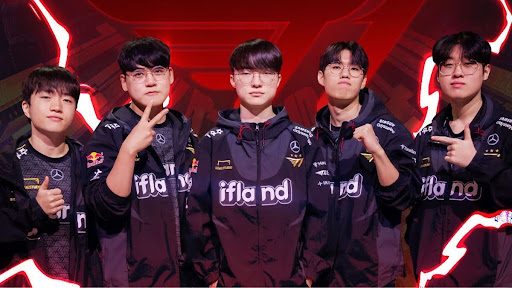
One of the clearest examples in League of Legends is T1. Their six Worlds titles reflect exceptional analytical depth. T1 balance controlled aggression with precise micro and disciplined macro, consistently winning lanes without sacrificing structure. Their analysts adapt drafts to every patch, and the players quickly adjust to new meta demands. As a result, T1 often outperform equally talented opponents because their strategic framework is more advanced.
Hanwha Life Esports offer another perspective. Their strong late game and frequent comebacks come from systematic preparation rather than luck. A broad champion pool, stable sidelanes, clear positional structure, and calculated late game decisions define their style. HLE’s analysts focus on predicting game flow, which shows in how the team shapes objective fights and pushes matches into drawn out scenarios that suit them.
Organizational Support and Infrastructure
Even the strongest roster cannot perform consistently without a proper system built around it. Modern esports organizations operate much like traditional sports clubs: coaches shape long term strategies, analysts study opponents, psychologists help with focus, and physiotherapists support players during intense schedules. This structure allows teams to concentrate fully on performance. A good example is T1 in League of Legends – an organization that has created a stable environment for multiple generations of rosters.
Strong infrastructure also determines how long a team can stay competitive. Liquid in CS2 showed that even without a perfect roster, solid management and analytical support can keep a team in the fight for top positions. Stability gives players confidence and helps them adapt to patches, meta changes, and roster updates without losing direction.
In Valorant, Fnatic highlight this idea even more clearly. Their international success was built not only on star players like Derke or Boaster, but also on discipline, structured coaching, and consistent organizational standards. Even after roster rebuilds, they maintained their identity and level of preparation. Fnatic prove that without a strong foundation teams burn out or collapse, while with proper infrastructure they can achieve long term, repeatable success.
Conclusion
When it comes to determining which esports teams truly stand out, I believe their success is shaped by a combination of interconnected factors. Individual skill is important, but without team chemistry, proper analytics, and strong organizational support, it rarely leads to consistent results. Modern esports is a space where victories go not just to the strongest players, but to the strongest systems. And it is this multi layered structure that makes the industry so competitive and fascinating to watch.