
When people picture a graduation ceremony, one image almost always comes to mind: a flat, square cap resting neatly on a graduate’s head.
This iconic headpiece, known as a mortarboard, carries centuries of academic tradition in its simple, unmistakable design. While it’s instantly recognizable, few people stop to consider its actual size or why those dimensions matter.
Whether you’re preparing for your own graduation, helping someone else get ready, or simply curious about academic traditions, understanding graduation cap dimensions turns out to be both practical and surprisingly interesting.
How Big Is a Standard Graduation Cap?
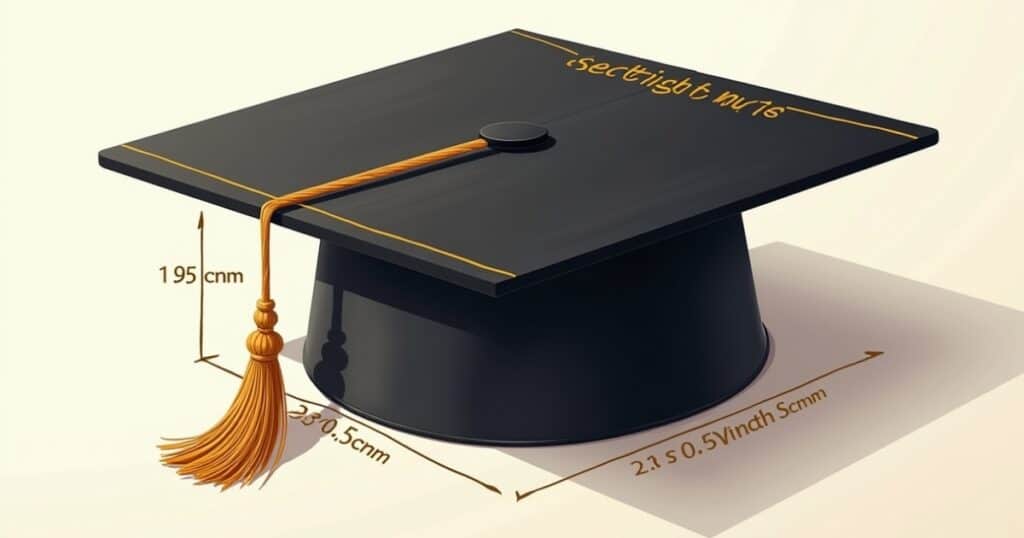
A standard graduation cap features a flat square board measuring approximately 9.4 inches (24 cm) on each side. This board sits on top of a fitted skull cap that secures the cap to the wearer’s head. From the center button hangs a tassel, usually about 9 inches (23 cm) long.
To visualize the size, the top of a graduation cap is roughly comparable to a large hardcover book or a dinner plate. This proportion wasn’t chosen randomly. Over centuries, the dimensions evolved to create the balanced, dignified silhouette we now associate with academic achievement.
The Evolution of the Mortarboard
The mortarboard traces its roots back to medieval European universities. Early versions were inspired by flat caps worn by scholars and clergy. As academic dress became more formal, the cap’s shape and proportions were refined to project authority, balance, and tradition.
The square design is often thought to symbolize books and learning, reinforcing the connection between education and scholarship. By the 19th century, academic regalia became standardized, and the mortarboard’s dimensions largely settled into the form we recognize today.
Standard Dimensions of Graduation Cap Components
The Square Board (Top)
The defining feature of the mortarboard is its flat, square top:
- Width: Approximately 9.4 inches (24 cm) per side
- Thickness: About 0.25–0.5 inches (0.6–1.3 cm)
- Material: Lightweight cardboard or plastic, covered with fabric matching the gown
When worn correctly, the board sits parallel to the ground, creating the classic scholarly profile. While these measurements are considered standard for adults, slight variations exist between manufacturers and institutions.
The Skull Cap
The skull cap is the functional core that keeps the mortarboard in place:
- Depth: Roughly 3–4 inches (7.6–10 cm)
- Circumference: Adjustable, typically using elastic for a flexible fit
- Material: Usually the same fabric as the gown for visual consistency
Most graduation caps are designed as one-size-fits-most, though custom sizing is sometimes available.
The Tassel
The tassel adds both decoration and symbolism:
- Length: About 9 inches (23 cm)
- Attachment: Fixed to a button at the center of the board
- Tradition: Worn on the right before the diploma is awarded, then moved to the left
Tassel colors often represent academic disciplines or honors, adding meaning to this small detail.

Graduation Cap Dimensions Across Academic Levels
Although graduation caps look similar across ceremonies, there are subtle differences by academic level.
Elementary and Middle School Caps
Caps designed for younger students often feature:
- Smaller boards, typically 8–9 inches (20–23 cm) square
- Lighter, more flexible materials
- Proportions adjusted for smaller frames
These changes preserve the classic look while improving comfort.
High School and Undergraduate Caps
This is where the standard dimensions are most common:
- 9.4-inch (24 cm) square board
- Adjustable skull cap
- Full-length tassel in school or departmental colors
These caps are designed to fit the widest range of adult head sizes.
Graduate and Doctoral Caps
At advanced academic levels, some variations appear:
- Boards may be slightly larger, up to 10 inches (25.4 cm) square
- Higher-quality materials
- In some institutions, doctoral candidates wear soft, round tams instead of mortarboards
These distinctions reflect the formality and prestige of advanced degrees.

Materials, Balance, and Stability
Despite its simple appearance, a graduation cap requires careful construction. The dimensions must be balanced to:
- Support the flat board without tipping
- Keep the skull cap secure during movement
- Accommodate the tassel without shifting weight
- Remain comfortable throughout the ceremony
Modern materials like lightweight inserts help maintain traditional proportions while reducing overall weight. Over time, manufacturers have fine-tuned these measurements so caps remain stable during handshakes, walking, and even the ceremonial cap toss.
International Variations in Graduation Cap Dimensions
While the American-style mortarboard is widely recognized, academic headwear varies across regions.
- British mortarboards: Often slightly smaller, around 8.5–9 inches (21.5–23 cm), with more rigid construction
- Continental Europe: Many universities use round tam-style caps measuring 10–12 inches (25–30 cm) in diameter
- Catholic institutions: Some use the biretta, a rigid, peaked cap about 8 inches (20 cm) across
- Asian institutions: Often follow American dimensions, sometimes incorporating local design elements
These variations reflect different academic traditions while serving the same ceremonial purpose.
Practical Tips for Choosing the Right Cap
Even with standard sizing, fit matters.
- Measure head circumference about 1 inch above the eyebrows
- Account for thick hair or styled updos
- Taller individuals may prefer slightly larger boards for visual balance
- Check sizing charts if purchasing separately
Storage and Transport
Standard mortarboards typically require storage boxes about 10 inches square and 4–5 inches deep. Folding caps reduce space, while stacked caps need extra height for safe storage.
DIY Graduation Caps: Getting the Dimensions Right
For custom or handmade caps, accurate dimensions are essential.
Standard materials include:
- Cardboard square: 9.4 × 9.4 inches (24 × 24 cm)
- Fabric: About 15 × 15 inches (38 × 38 cm)
- Elastic headband: 22–25 inches (56–63.5 cm)
- Button and 9-inch tassel
When assembling, reinforce corners, keep the board perfectly flat, center the skull cap carefully, and test the fit often.
Why Standardized Dimensions Matter
The uniform size of graduation caps serves multiple purposes:
- Visual unity: Large ceremonies look cohesive and striking
- Practical function: Proven proportions ensure comfort and stability
- Symbolism: Identical caps emphasize equality and shared achievement
The square shape evokes books and learning, while its flat surface represents a solid foundation of knowledge.
Decoration Tips
When adding personal touches to your cap:
- Keep decorations lightweight to avoid tilting the cap
- Distribute weight evenly across the 9.4-inch square
- Consider height decorations that extend more than 2-3 inches above the board may become unstable
- Remember the cap will be viewed primarily from above, so design accordingly
- Make sure any decorations work well with your graduation dress or outfit under your robe
Popular Decoration Approaches
Within the standard dimensions, graduates have found creative ways to express themselves:
- Flat designs that cover the entire 9.4-inch square with photos, quotes, or artwork
- 3D elements secured firmly to the board (though keeping height moderate for stability)
- LED lighting incorporated into the design (with battery packs discreetly attached to the skull cap)
- Tassel embellishments that enhance but don’t overwhelm the standard 9-inch length
These personalizations make each cap unique while working within the standard dimensional framework.
Decorating Within the Standard Dimensions
Personalized caps have become increasingly popular. When decorating:
- Keep embellishments lightweight
- Distribute weight evenly across the board
- Limit height to maintain balance
- Design with a top-down viewing angle in mind
From flat artwork to modest 3D elements or subtle lighting, creativity thrives within the traditional 9.4-inch framework.
Conclusion
The familiar 9.4-inch square mortarboard is far more than a simple accessory. Its carefully refined dimensions reflect centuries of academic tradition, balancing symbolism, practicality, and visual impact.
From early school milestones to doctoral ceremonies, the consistent proportions of graduation caps create a powerful, instantly recognizable symbol of educational achievement.
Understanding these dimensions adds a new layer of appreciation the next time you see a sea of square-topped caps moving in unison. What looks simple at first glance is, in fact, a thoughtfully designed emblem of learning, history, and accomplishment.