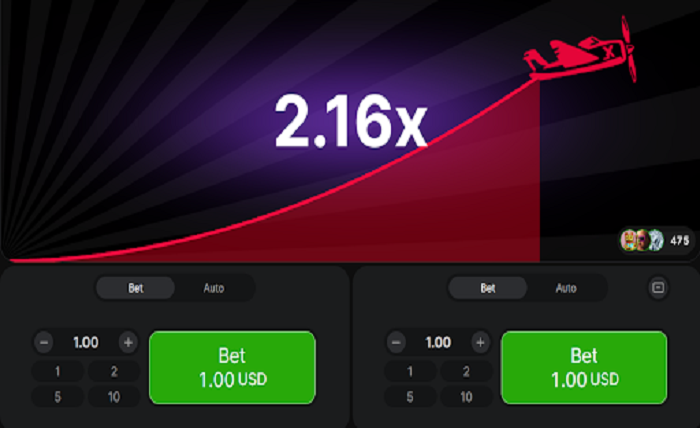
Crash games have moved into mainstream online gambling not by copying traditional formats, but by simplifying the core of what makes gambling engaging. Unlike slots, which rely on reels, symbols, and layered bonus features, crash games present a direct challenge: place a bet, watch the multiplier rise in real time, and decide when to cash out. If the multiplier crashes before the cashout, the player loses the entire stake.
This structure appeals to a newer segment of gamblers who are less interested in waiting through animations or unlocking features. Instead, they’re looking for short, fast decisions with visible consequences. The model has proven adaptable, spawning a variety of new titles that follow the same core principle. One example, King Thimbles Game, maintains the crash format but uses sleight-of-hand visuals and themed presentation to distinguish itself.
Comparing Crash Games to Slots and Table Formats
Crash games differ significantly from traditional slots. Slot machines are built on random number generators, hidden odds, and passive gameplay. Players spin, wait, and hope for specific outcomes. Most wins are small, spaced out across long sessions, with occasional bonuses to maintain interest. For many users, this style still works, especially when combined with strong visuals and immersive design. But it also requires sustained attention and patience.
Table games such as blackjack or roulette offer more interaction, but the gameplay is still bound by predefined rules. These formats reward understanding of probabilities and disciplined play, which appeals to experienced users. However, they are not optimized for speed or high-frequency engagement.
Crash games eliminate most of this complexity. They offer immediate results, simple controls, and no waiting between rounds. Each decision is made in real time, based on a visible multiplier. That immediacy draws a different type of player—someone who values reaction and timing over long-term planning or strategy.
Format Comparison
| Feature | Crash Games | Slots | Table Games (e.g., Blackjack, Roulette) |
| Outcome Speed | Instant (seconds) | Moderate (spin cycles) | Slow to moderate (multi-round) |
| Player Control | High (timing-based cashout) | Low (no interaction after spin) | Medium (decisions guided by rules) |
| Complexity | Very low | Moderate to high | High |
| Skill Involvement | Minimal | None | Moderate to high |
| Social/Live Visibility | Often visible (real-time bets, results) | Rare | Limited or absent |
| Session Style | Short, repeatable bursts | Longer sessions | Structured, rule-bound |
The Role of Social Mechanics
Many crash games now incorporate social features, such as public betting logs, real-time leaderboards, and chat options. These elements encourage users to observe others’ strategies, compare outcomes, and react accordingly. Unlike traditional slots, where each player is isolated in their session, crash games promote visibility. This has created a secondary layer of engagement, where players are influenced by the behavior of others too.
Social context also plays a role in shaping risk tolerance. If other users consistently cash out at high multipliers, new players may hold longer than they otherwise would. The social mechanics do not dominate the game, but they subtly affect decision-making, creating a more dynamic environment than standard solo formats.
Influence on Gambling Platform Design
The rise of crash games has influenced how platforms approach game development. Many operators now prioritize shorter round cycles, lower entry barriers, and visible decision points.
There is also growing interest in blending crash mechanics with other formats. Some developers are experimenting with hybrid games that combine multiplier-based timing with arcade-style graphics or team-based betting pools. These adaptations are still early, but they reflect a broader trend toward faster, more flexible gambling experiences.
Risks and Limitations
The strengths of crash games, like their speed, simplicity, and emotional intensity are also potential liabilities. Players can place dozens of bets in a matter of minutes. Losses accumulate quickly, and the desire to recover from a failed cashout can lead to impulsive behavior.
Unlike longer-format games that include natural pauses or slower pacing, crash games encourage rapid repetition. Some platforms have started introducing features to slow down gameplay or limit session length, but these tools remain inconsistent across operators.
Key concerns include:
- Rapid betting loops that make it easy to lose money quickly with little time for reflection
- Loss-chasing behavior triggered by immediate, high-stakes outcomes
- Weak or inconsistent responsible-gaming controls, especially on smaller or unregulated platforms
These risks may not be unique to crash games, but the format intensifies them in ways that demand more focused oversight.
The Bottom Line
Crash games prioritize speed over complexity, visibility over abstraction, and individual decisions over passive outcomes. Their simplicity is the foundation of a new type of gambling experience, one that reflects where user behavior is already heading. The question is not whether crash games will continue to grow, but how other formats will respond to the habits they’ve revealed