Ever cracked open a soda, flicked the cap away, and never thought about it again? Those tiny metal or plastic circles we casually discard by the billions are actually the result of obsessive engineering precision.
Bottle Cap Dimensions may look trivial, but their dimensions are calculated down to fractions of a millimeter to guarantee airtight seals, cross-brand compatibility, and global standardization. When they work, nobody notices. When they don’t, carbonation leaks, flavors fade, and entire production lines grind to a halt.
From small craft breweries to global beverage giants, bottle cap measurements quietly keep the drinks industry functioning. Let’s take a closer look at this underestimated piece of everyday engineering.
How Big Are Standard Bottle Caps?
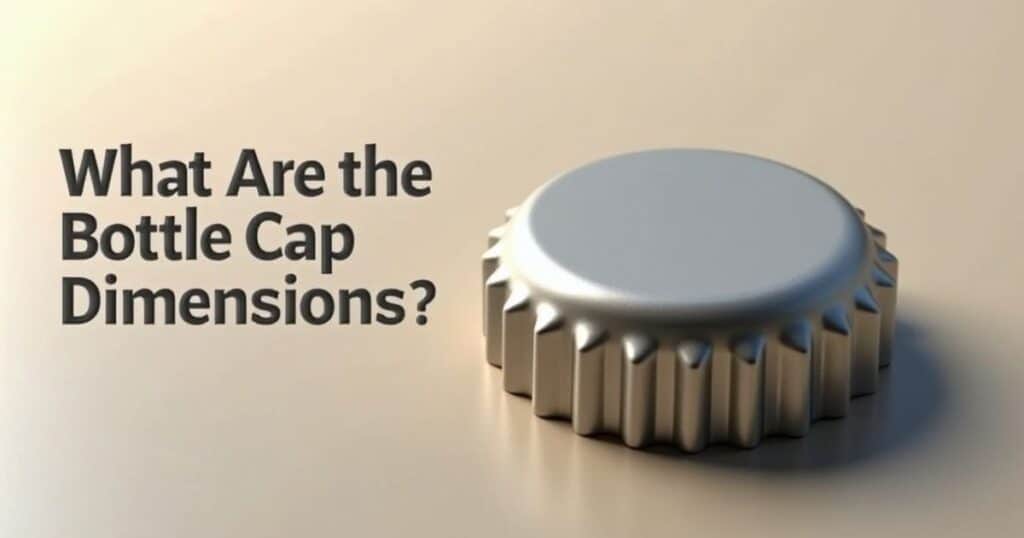
The most familiar bottle cap is the classic crown cap used on beer and glass soda bottles. Its standard diameter is about 26.7 millimeters, just over one inch. Plastic screw caps, commonly found on water and soft drink bottles, usually range from 28mm to 38mm, while wide-mouth containers like sports drinks often use caps between 42mm and 48mm.
These numbers are anything but random. They reflect decades of fine-tuning, balancing ease of opening, production efficiency, material costs, and the absolute necessity of a dependable seal.
The Crown Cap: A Miniature Engineering Classic
The crown cap is one of packaging’s most enduring inventions. First patented in 1892, its design has barely changed in over a century, which is rare in industrial history and deeply suspicious in a good way.
A standard crown cap measures roughly 26.7mm in outer diameter and features 21 crimps around the edge. The inner diameter sits at about 21.5mm, perfectly sized to grip the 26.5mm lip of a glass bottle. That slight mismatch is intentional. It creates the pressure required for a tight, leak-proof seal.
The cap is about 6mm high, with a metal top roughly 1mm thick. Inside is a liner, usually around 0.8mm, which actually forms the seal. Early versions used cork. Modern liners rely on plastic composites that won’t affect taste.
Despite weighing only about 2.2 grams, a crown cap can withstand over 80 pounds of internal pressure. That strength-to-weight ratio is why it remains one of the most efficient packaging solutions ever created.
Plastic Screw Caps: Precision in Variety
Plastic screw caps come in a wide range of standardized sizes, each tailored to specific bottle types.
- 28mm caps dominate the bottled water market. They’re relatively short, typically 15–20mm tall, and almost always include tamper-evident bands.
- 38mm caps are common on carbonated soft drinks, providing a larger sealing surface for higher pressure. These usually require about 2.5 full turns to remove.
- 42–48mm caps appear on sports drinks and juices, allowing faster pouring and easier drinking. Many use single-lead threads, opening with just one rotation.
Most of these designs follow PCO standards, which define not just diameter but thread pitch, height, and sealing surfaces. That’s why a cap made on one continent fits a bottle made on another without drama.
Metal Twist-Off Caps: The Middle Ground
Twist-off metal caps combine the size of crown caps with the convenience of screw threads. Their diameter usually falls between 26 and 27mm, but instead of being crimped, they twist on and off.
Inside, these caps use multiple short thread segments rather than a continuous thread, allowing removal with a quick quarter turn. They’re slightly taller than crown caps, around 7.5mm, to accommodate the threading.
Manufacturing tolerances are tight, often within ±0.13mm, ensuring they hold pressure while still being easy to open. Weight typically ranges from 2.5 to 2.7 grams, a small increase for added convenience.
See Also: Water Bottle Sizes: Everything You Need to Know
Wine and Spirits: A Different Scale Entirely
Wine and spirits closures live in their own dimensional universe.
Standard wine screw caps usually measure 30mm in diameter and around 60mm in height, including the skirt that wraps down the bottle neck. Spirits bottles vary more, but common cap diameters include 22mm, 24mm, and 28mm, with premium brands often choosing taller designs for visual impact.
Traditional wine corks, while not technically caps, follow their own standards. Diameters are usually around 24mm, with lengths ranging from 38mm to 54mm, depending on how long the wine is meant to age.
How to Identify Cap Sizes at Home
You don’t need lab equipment to get a rough idea of cap dimensions.
A US quarter measures 24.26mm across. If a cap extends about 1mm beyond the coin on all sides, you’re probably looking at a standard crown cap. A typical 28mm plastic water bottle cap is just over half the width of a standard credit card.
For precision, digital calipers are ideal, but a ruler with millimeter markings works well enough. Measure across the widest point and ignore tamper bands for accuracy.
The Standards Behind the Scenes
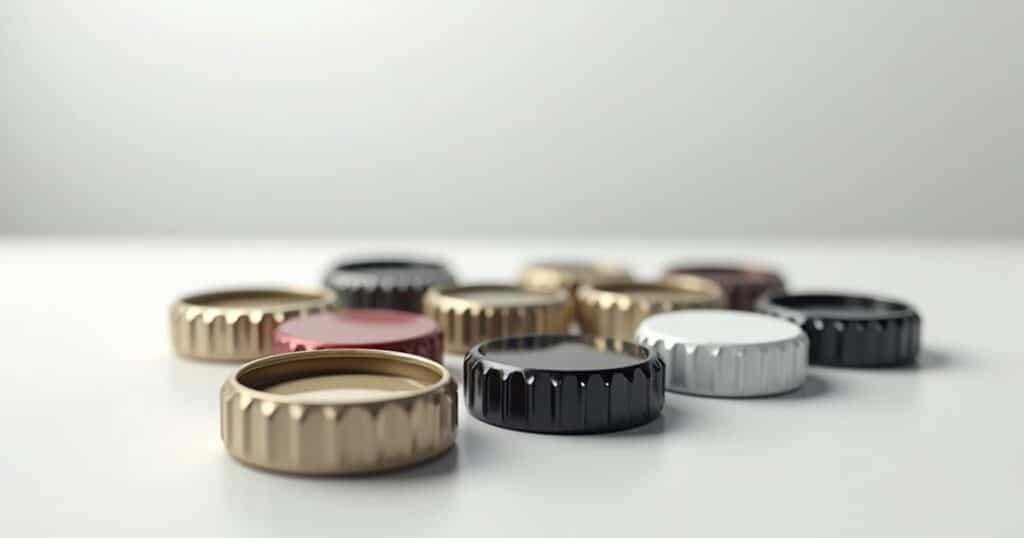
Bottle cap dimensions are governed by strict industrial standards. International specifications define acceptable tolerances for crown caps, plastic closures, and thread designs to ensure global compatibility.
These standards allow a cap produced in one country to seal a bottle manufactured halfway around the world. Without them, modern high-speed bottling would be a logistical nightmare.
Environmental Impact of Tiny Measurements
Even small dimensional changes can have massive environmental effects when multiplied by billions.
When major beverage companies reduced plastic cap height by just a few millimeters, the result was tens of thousands of tons of plastic saved annually. Shorter caps also allowed shorter bottle necks, reducing PET usage even further.
More recently, regulations requiring caps to remain attached to bottles have altered designs again. Hinges and tethers were added without changing the basic diameters that machines and consumers rely on.
Specialty and Custom Cap Sizes
Not all beverages stick to the standard playbook.
Kombucha often uses lug caps that open with a partial twist. Craft beers sometimes adopt larger crown caps for decorative branding. Cold brew coffee and premium juices favor oversized caps for wide-mouth containers, prioritizing access over portability. Energy shots go the opposite direction, using tiny caps to reinforce their concentrated nature.
See Also: Milk Carton Sizes: Everything You Need to Know
Why Bottle Cap Dimensions Matter
These measurements affect far more than packaging aesthetics.
They shape user experience, determining grip comfort and opening force. They protect product integrity, where even a 0.2mm error can cause leaks or contamination. They keep bottling lines running at speeds exceeding 2,000 bottles per minute. In some cases, they even support brand identity, becoming recognizable design elements.
Practical Uses for This Knowledge
Knowing cap dimensions isn’t just trivia.
It helps with home brewing, crafting projects, reusing bottles, and designing accessibility tools for people with limited hand strength. Small details become very practical when the wrong cap doesn’t fit.
The Future of Bottle Cap Design
Caps continue to evolve quietly.
Lightweight metal designs reduce material use without changing external size. Biodegradable materials aim to fit existing bottles while breaking down more easily. Some experimental caps even hide smart technology inside, adding tracking or authentication features without altering familiar dimensions.
Conclusion
The Bottle Cap Dimensions may be small, but its dimensions represent more than a century of refinement, standardization, and engineering discipline. From the iconic 26.7mm crown cap to the diverse world of plastic closures, these tiny components keep the global beverage industry running smoothly.
Next time you open a drink, take a moment to notice the cap before it disappears into the trash. That little disc is doing far more work than it ever gets credit for.