Have you ever found yourself standing in front of a shelf full of water bottles, unsure which size is best suited to your needs? You’re not alone. Whether you’re a gym-goer, hiker, office worker, or student, staying hydrated on the go is essential, but choosing the right bottle size can make a world of difference in your daily routine.
Water bottles come in all shapes and sizes, each designed with specific activities in mind. The right size can ensure you’re properly hydrated without overburdening yourself, while the wrong one may leave you running dry when you need water the most.
In this guide, we’ll explore the different water bottle sizes available, from compact, pocket-sized options to large, gallon jugs. I’ll help you determine the best size for various activities, explain how to measure bottle capacity accurately, and share some surprising facts along the way.
Understanding Water Bottle Sizes
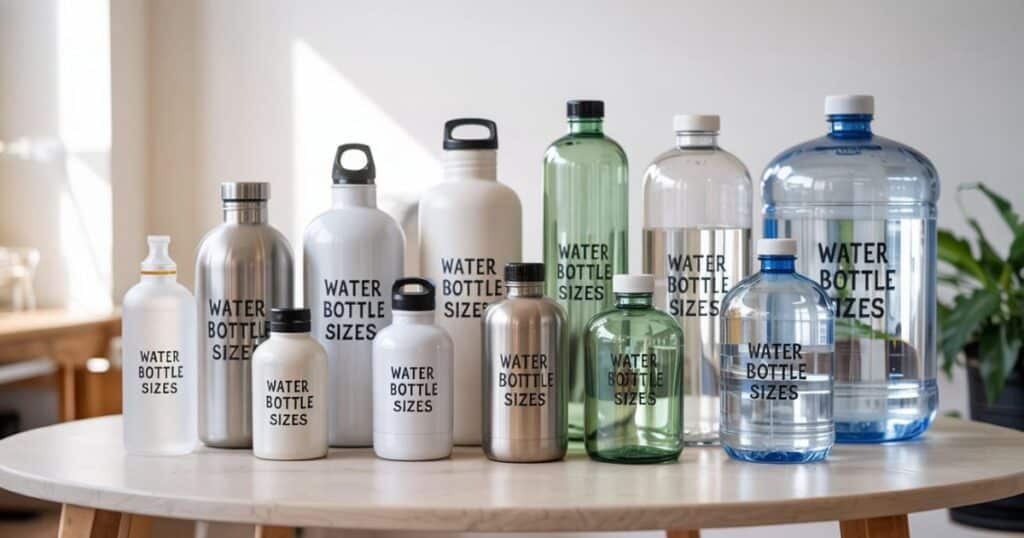
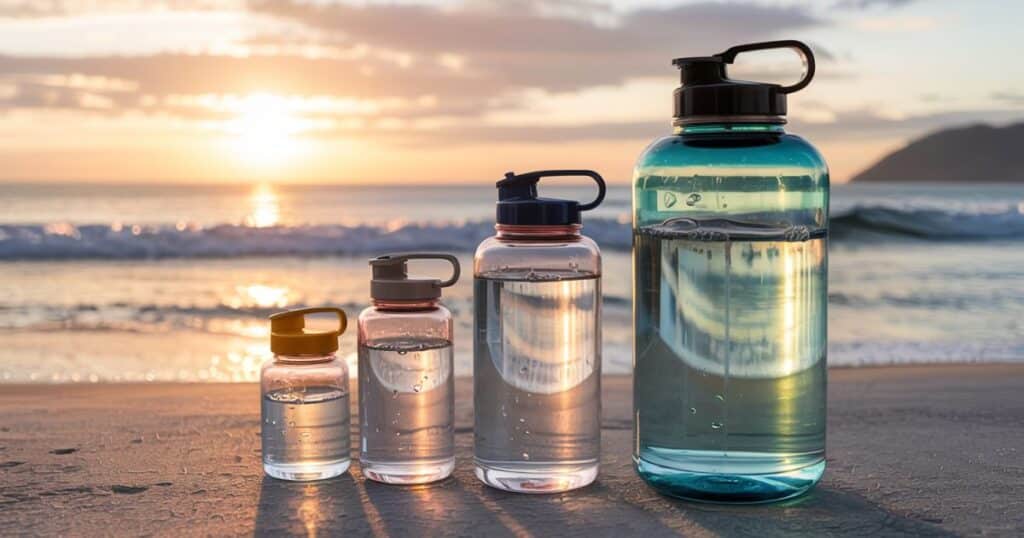
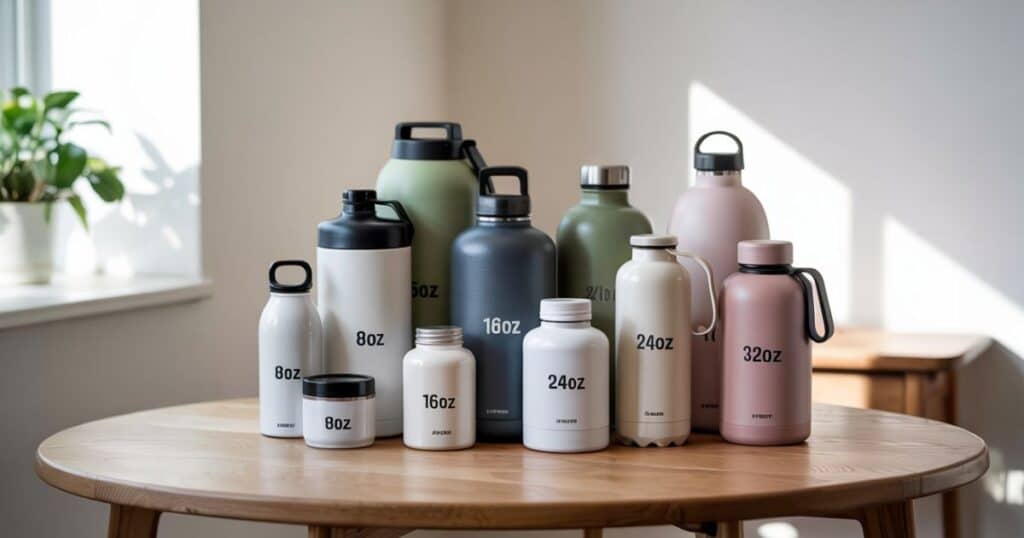
Water bottles vary widely, with sizes ranging from small 8-ounce containers to giant 128-ounce jugs (1 gallon). Most everyday bottles are typically between 16 and 32 ounces, or about 2-4 cups of water.
These measurements generally refer to fluid capacity rather than the bottle’s physical dimensions, but larger bottles will naturally be bigger.
When choosing your bottle, think about where and how you’ll use it. A 16-ounce bottle is compact and easily fits into a purse or cup holder, while a 40-ounce bottle provides hydration for a long hike but might not fit in a standard cup holder.
Standard Water Bottle Sizes
8-10 Ounce Bottles (240-300 ml)
The smallest standard bottles, holding 8-10 ounces of water, are often used in specific situations. While small, they serve important purposes, such as fitting into children’s lunchboxes or small bags. Their lightweight design makes them ideal for young kids, and they also help with portion control.
Many high-end reusable bottles offer an “on-the-go” mini option in this size, which is perfect for short outings.
Fun Fact: These smaller bottles are often seen in the aviation industry because they fit perfectly on meal trays and are lighter, reducing fuel consumption during flights.
12-16 Ounce Bottles (350-500 ml)
12-16 ounce bottles strike a balance between portability and adequate hydration for short periods. They are commonly used for workouts, office meetings, and as standard coffee shop tumblers. These bottles fit comfortably into car cup holders, bicycle cages, and backpack side pockets.
Fun Fact: The standard 16.9-ounce bottle was globally adopted because it provides the ideal amount of water to take medication, according to pharmacists.
20-24 Ounce Bottles (600-700 ml)
These bottles offer extended hydration without becoming too bulky, making them popular among active professionals and fitness enthusiasts. They provide enough water to stay hydrated during a moderate workout or workday without needing frequent refills.
Fun Fact: Studies show that people with 20+ ounce water bottles visible on their desks drink nearly 50% more water throughout the day.
See Also: Milk Carton Sizes: Everything You Need to Know
32 Ounce (1 Liter) Bottles
32-ounce bottles, or 1-liter bottles, are large enough to meet about half your daily hydration needs in one fill. These bottles are popular for desk workers, gym-goers, or anyone spending a full day away from water sources. They also often feature insulation to keep drinks cold or hot for extended periods.
Fun Fact: The popularity of 32-ounce bottles has risen over 300% in the last decade due to the growing emphasis on proper hydration.
40-50 Ounce Bottles (1.2-1.5 Liters)
For those needing serious hydration, the 40-50 ounce bottles offer a large capacity without excessive bulk. They’re ideal for outdoor activities, long workdays, or travel. Many come with reinforced handles, wide mouths for easy filling, and measurement markings.
Fun Fact: These bottles were originally designed with emergency preparedness experts to meet the minimum water requirement for an adult in a disaster situation.
64 Ounce (Half-Gallon) Bottles
Half-gallon bottles are large enough to meet your daily hydration needs in one go. These bottles are especially popular with fitness enthusiasts who need consistent hydration during long workouts. They are also favored by outdoor workers and anyone in environments without easy access to water.
Fun Fact: Many personal trainers recommend half-gallon bottles to help clients track hydration, especially given that 75% of Americans suffer from chronic dehydration.
128 Ounce (One-Gallon) Jugs
The 1-gallon jug is the ultimate hydration solution, offering enough water to last the whole day. Popularized by bodybuilders and athletes, these jugs have crossed into mainstream use. They often include motivational time markers to encourage consistent drinking throughout the day.
Fun Fact: The “gallon challenge,” popular among fitness enthusiasts, has helped increase average water consumption among users.
Special-Purpose Water Bottle Sizes
Collapsible Bottles (Variable Sizes)
Collapsible water bottles are a great option for those needing flexibility. These bottles can expand to hold 16-32 ounces of water, but compress to just 1-2 inches thick when empty, saving space in your bag. Ideal for travelers, hikers, or commuters, collapsible bottles are designed with durable materials like silicone or BPA-free plastics.
Fun Fact: The design of collapsible bottles was adapted from military containers where weight and space efficiency were crucial.
Hydration Reservoirs (1-3 Liters)
Hydration reservoirs are flexible pouches designed to fit inside backpacks. These reservoirs hold between 1-3 liters of water and include a bite valve for hands-free drinking during activities like hiking, cycling, or skiing.
Fun Fact: The idea for hydration reservoirs came from a mountain biker who first created the CamelBak by adapting an IV bag, now a multi-million dollar product.
See Also: Chip Bag Sizes – Sizes of Common Objects and Stuff
How to Choose the Right Water Bottle Size
When choosing your perfect water bottle, consider the following factors:
Your Daily Activities
- Office Workers: A 20-32 ounce bottle works well for hydration between refills.
- Fitness Enthusiasts: A 32-64 ounce bottle is great for longer workouts.
- Outdoor Adventurers: Choose a bottle of 32 ounces or more for extended outdoor activities.
- Commuters: A 16-20 ounce bottle is light and compact for daily transit.
Practical Limitations
- Cup Holders: Car cup holders fit bottles up to 3.5 inches in diameter (usually 24 ounces or less).
- Backpack Pockets: Larger bottles may not fit securely in smaller pockets.
- Weight: A gallon of water weighs approximately 8.3 pounds, so consider the weight for portability.
Environmental Factors
- In hot weather, increase your bottle size to stay hydrated.
- For air travel, bring an empty bottle through security and refill it after.
Practical Measurement Tips
If your bottle doesn’t have markings, here are some quick measurements:
- Your cupped hands hold about 2-3 ounces of water.
- A standard shot glass holds 1.5 ounces.
- A tennis ball container holds roughly 12 ounces.
- A coffee mug holds about 8-12 ounces.
The Future of Water Bottle Sizes
The water bottle industry is continuously evolving with trends like:
- Smart Bottles: Water bottles with integrated technology to track your hydration.
- Sustainable Sizing: Bottles designed to replace the number of disposable bottles you would typically use.
- Activity-Specific Engineering: Specialized sizes for activities like yoga, marathon running, or hiking.
Conclusion: Finding Your Perfect Fit
The ideal water bottle size depends on your lifestyle and hydration needs. A bottle that’s too small can leave you dehydrated, while one that’s too large can become burdensome. Consider experimenting with different sizes to find the one that fits seamlessly into your daily routine. Many experts recommend owning several bottles for different activities instead of one all-purpose bottle.
Remember, the best bottle is the one that helps you stay hydrated consistently throughout the day.