Ever found yourself rummaging through your desk drawer, wondering which staple size you need for that stack of papers? You’re not alone. The humble staple—an often-overlooked fastener—comes in a wide range of sizes, each one serving a specific purpose.
From the tiny staples that barely pierce a few sheets to the heavy-duty fasteners that bind thick booklets, staples have been essential to paper management since the late 19th century. While they might seem insignificant, choosing the right staple size can be the difference between a neatly bound document and a frustrating mess of bent metal and torn paper.
Let’s explore the different staple sizes and how these small, yet powerful, fasteners compare to everyday objects in our lives.
How Long Are Staples?
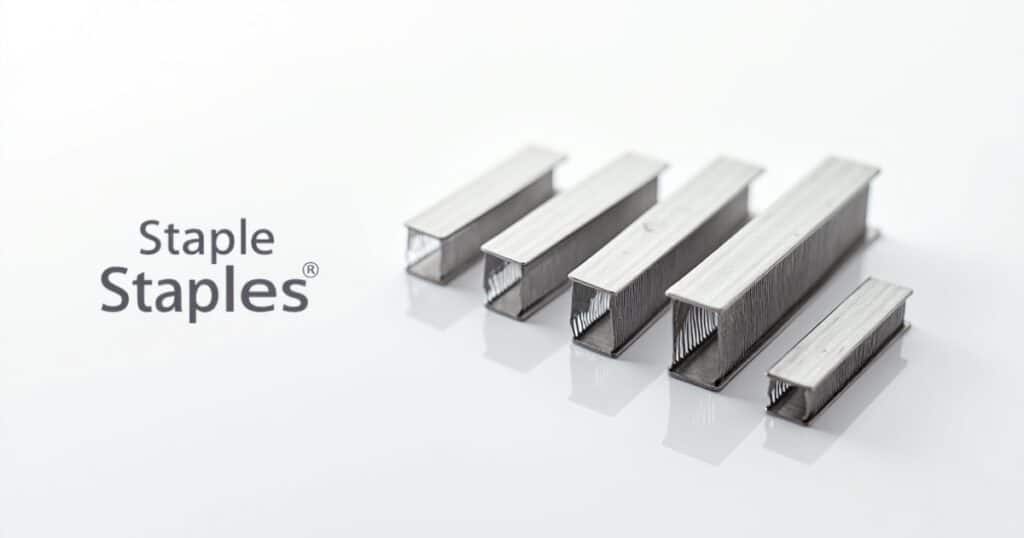
Standard staples typically range from 1/4 inch (6mm) to 3/4 inch (19mm) in length, with the most common office staple measuring around 1/4 inch to 3/8 inch (6-10mm). To put this into perspective, a standard staple is roughly the width of your pinky fingernail or the diameter of a pencil eraser. Despite their small size, these staples can fasten anywhere from a few sheets of paper to substantial documents.
Standard Office Staples (26/6)
The staple most commonly found in office staplers is the “26/6” staple. The “26” refers to the wire gauge (thickness), while the “6” denotes the leg length in millimeters. These staples measure approximately 1/4 inch (6mm) in length and can handle between 2 to 20 sheets of standard paper. Their flat crown spans about 1/2 inch (12.7mm), creating that familiar dual-puncture pattern.
This staple size is popular for its practicality—small enough to avoid wasting material, yet sturdy enough to secure everyday documents. The 26/6 staple has remained unchanged in design since the early 1900s, proving that simple solutions can endure the test of time.
Heavy-Duty Staples (23/8 to 23/15)
When regular staples fall short, heavy-duty staples step in. Ranging from 5/16 inch (8mm) to nearly 5/8 inch (15mm) in leg length, these heavy-duty staples—such as the 23/8, 23/10, 23/13, and 23/15—can fasten thicker stacks of paper. For example, a 23/8 staple can handle 30 to 50 sheets, while the 23/15 staple can bind up to 100 sheets or more. The thicker wire gauge (23) provides added durability.
These staples are commonly used in offices, print shops, and publishing houses for large documents. They offer a crucial innovation in office technology, allowing documents to be bound quickly and efficiently, without the need for older binding methods like stitching or gluing.
Miniature Staples (26/4)
Miniature staples, such as the 26/4, are the smallest staples, measuring just over 5/32 inch (4mm) in leg length. These tiny fasteners are used for light-duty stapling tasks where minimal paper penetration is desired. Ideal for use with portable staplers or for documents that will later be scanned or filed, they leave smaller punctures that are less noticeable when removed.
Originally designed for attaching price tags to clothing, miniature staples are now used in craft projects, bookbinding, and even medical applications where precision and discretion are necessary.
Booklet Staples (24/6 to 24/10)
For creating booklets and brochures, booklet staples are used. These staples typically come in sizes such as 24/6, 24/8, or 24/10, with leg lengths ranging from 1/4 inch (6mm) to 3/8 inch (10mm). The 24 gauge wire strikes a balance between flexibility and strength, allowing the staple to bend during the binding process while still maintaining its integrity.
Booklet staples are essential for professional printing, binding magazines, event programs, and marketing materials. They ensure that the finished product lies flat when opened and that all pages are securely fastened.
Industrial Staples (Various Sizes)
In construction and manufacturing, industrial staples come in sizes much larger than their office counterparts. With lengths ranging from 3/8 inch (10mm) to 2 inches (50mm) or more, these heavy-duty staples are designed for specialized tasks such as upholstery, roofing, insulation, and packaging. The larger wire gauges and thicker crowns give them the strength to bind tough materials like fabric, wood, and even concrete backing.
Some industrial staple guns can apply enough force to drive staples through hardwood or thin metal sheets, making them essential for construction-grade applications. These large staples provide the necessary power and durability for heavy-duty work.
Surgical Staples
Surgical staples, used in medical procedures, represent the most specialized application of staple technology. These staples measure between 3/16 inch (4.8mm) and 1/4 inch (6.4mm) in width, with leg lengths adjusted based on tissue thickness. Made from biocompatible materials like titanium or stainless steel, surgical staples are used to close wounds with minimal tissue trauma.
The precision engineering of these staples has revolutionized surgery, reducing operation times and improving healing outcomes. Some studies show that surgical stapling can reduce procedure time by up to 75%, making it a valuable tool in modern medicine.
See Also: Thank You Card Sizes (Standard & Other Sizes)
Real-World Applications and Measurement Tips
Visualizing staple sizes is easier when you compare them to objects you encounter daily:
- A 26/6 staple is roughly the thickness of two stacked quarters.
- The crown width of a standard staple (1/2 inch) is about the width of a pencil.
- A 23/15 staple (5/8 inch) is close to the diameter of a drinking straw.
- The smallest miniature staples (1/8 inch) are about the thickness of a credit card.
Measuring Without Tools
In a pinch, here are some ways to estimate staple sizes without a ruler:
- A U.S. quarter is about 1 inch in diameter, making it handy for measuring staple lengths.
- A standard sheet of 20 lb copy paper is 0.004 inches thick—use this to estimate staple length based on how many sheets your stapler can handle.
- Most smartphones are around 3 inches wide, providing a quick reference for staple width.
- The width of your thumb at the knuckle is about 1 inch for most adults, helpful for estimating staple crown widths.
Practical Tips for Choosing the Right Staple Size
To avoid stapler jams and secure documents properly:
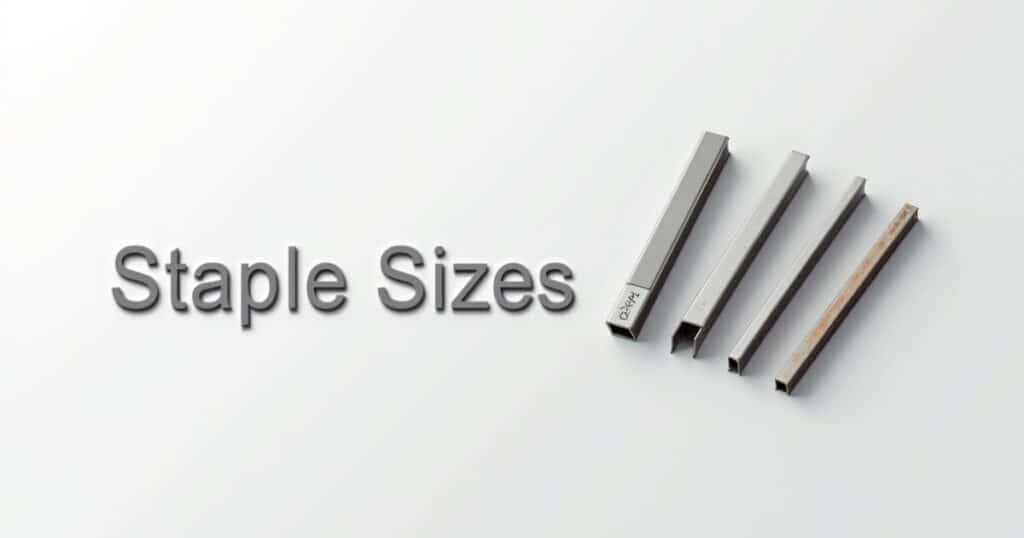
- For everyday office use (2-20 sheets), use standard 26/6 staples.
- For 20-50 sheets, use heavy-duty 23/8 or 23/10 staples.
- For documents exceeding 50 sheets, go with 23/13 or 23/15 staples, and ensure your stapler is rated for heavy-duty use.
- For booklets, choose 24/6 or 24/8 staples specifically designed for saddle-stitching.
See Also: Samsonite Suitcase Sizes: A Complete Guide
Conclusion
From securing a few sheets to binding booklets or even closing surgical wounds, staples are far more important than they first appear. Next time you reach for your stapler, appreciate the precision engineering behind that small metal fastener. Choosing the right size ensures your documents are properly secured, and understanding staple dimensions allows for better decision-making in both everyday office tasks and specialized applications.